Want to buy or sell something? Check the classifieds
  • The Fedora Lounge is supported in part by commission earning affiliate links sitewide. Please support us by using them. You may learn more here.

Straw Types

The Shoe

Call Me a Cab
Messages
2,698
Location
Wakayama, Japan
Okay, I’ve posted this on a couple of other places in the lounge, but haven’t managed to get an answer yet. I’ll try once more here and if I don’t get anything I’ll give up. After all, I t’s not something that’s keeping me up at night – just curious.
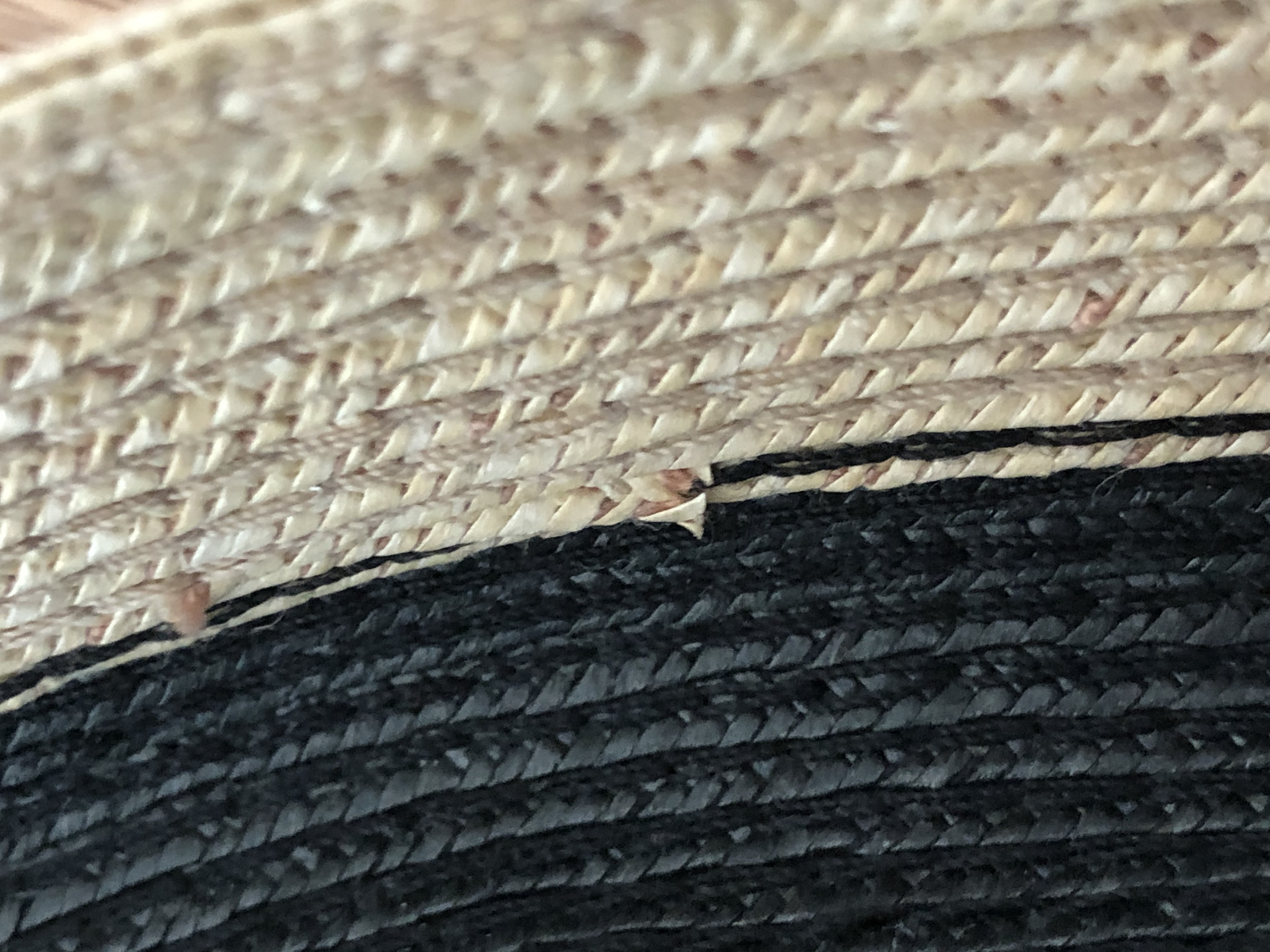
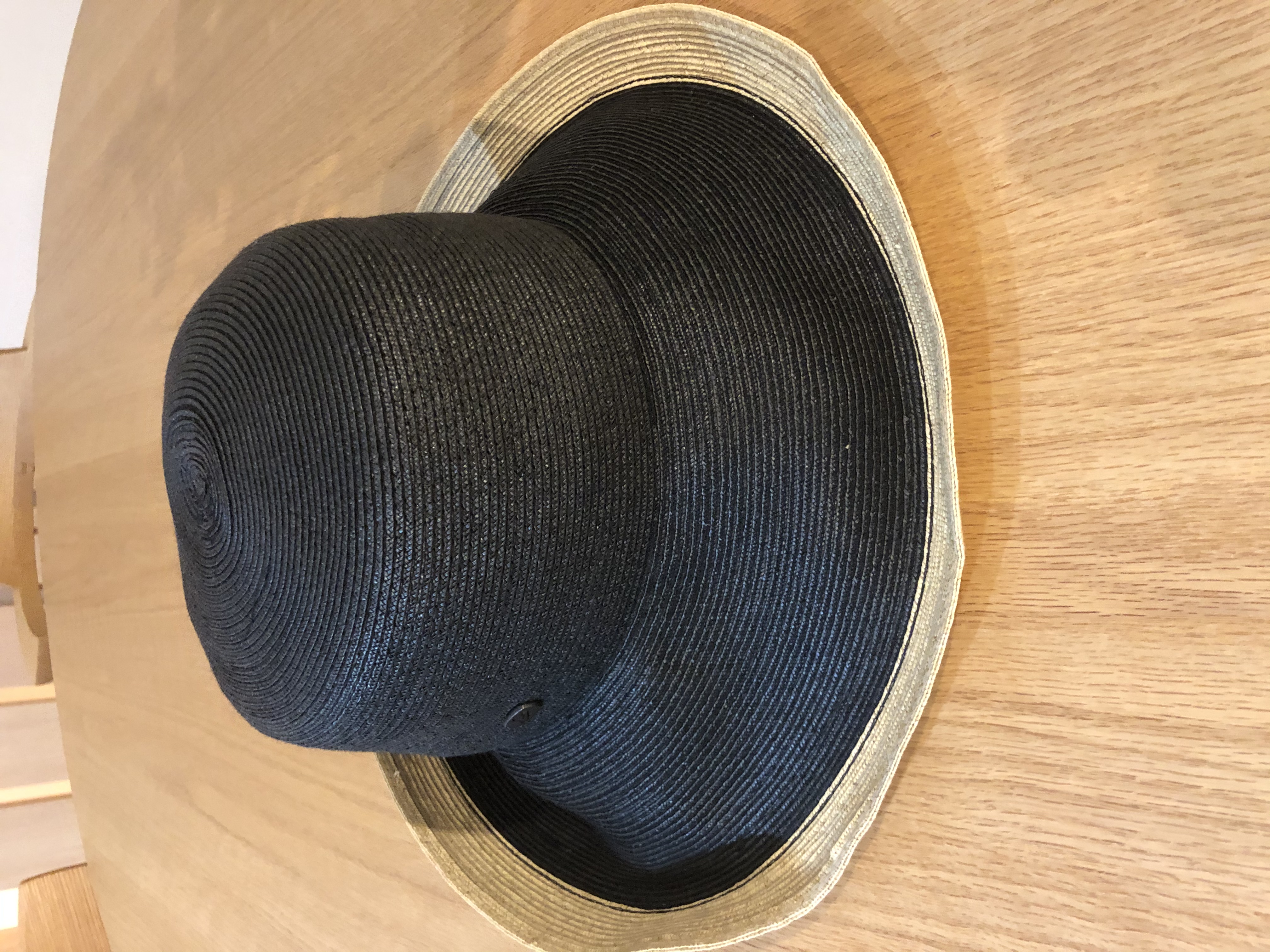
I live in Japan. My wife bought this Borsalino hat recently. On the tag it says 100% Paglia, but on the Japanese tag (in Japanese), it says paper. Now I understood Paglia was straw, which to me suggests whole fibres. Paper on the other hand is made from pulp. The only thing I can think of is that it’s made from the pulp of the Paglia straw. I somehow doubt this to be true though. I guess it’s more likely that there is a mistake on one of the tags. Can anyone shed any light on this?
0A74C6E3-7FA6-4EF4-A1CC-0D14544A0CAB.jpeg
6EF744F2-B98B-4B96-9DFE-506CAB828480.jpeg
CDC502FD-D594-4D6D-87A7-DF7C681A03C9.jpeg
 
Messages
18,978
Location
Central California
Okay, I’ve posted this on a couple of other places in the lounge, but haven’t managed to get an answer yet. I’ll try once more here and if I don’t get anything I’ll give up. After all, I t’s not something that’s keeping me up at night – just curious.
I live in Japan. My wife bought this Borsalino hat recently. On the tag it says 100% Paglia, but on the Japanese tag (in Japanese), it says paper. Now I understood Paglia was straw, which to me suggests whole fibres. Paper on the other hand is made from pulp. The only thing I can think of is that it’s made from the pulp of the Paglia straw. I somehow doubt this to be true though. I guess it’s more likely that there is a mistake on one of the tags. Can anyone shed any light on this? View attachment 228862 View attachment 228860 View attachment 228861


I found this, but it’s not applicable to your hat:

https://img02.aws.kooomo-cloud.com/upload/209/cms/611637/default/14626/LOOKBOOK-BORSALINO-SS20.pdf

The website uses “paglia,” but only to describe types of paja toquilla. Perhaps Panama hats are the only “straw” hats offered in this catalog? Your hat looks to be a Milan (the weave, not necessarily the type of “straw”).
 

Daniele Tanto

I'll Lock Up
Messages
4,586
Location
Verona - Italia
I live in Japan. My wife bought this Borsalino hat recently. On the tag it says 100% Paglia, but on the Japanese tag (in Japanese), it says paper. Now I understood Paglia was straw, which to me suggests whole fibres. Paper on the other hand is made from pulp. The only thing I can think of is that it’s made from the pulp of the Paglia straw. I somehow doubt this to be true though. I guess it’s more likely that there is a mistake on one of the tags. Can anyone shed any light on this?

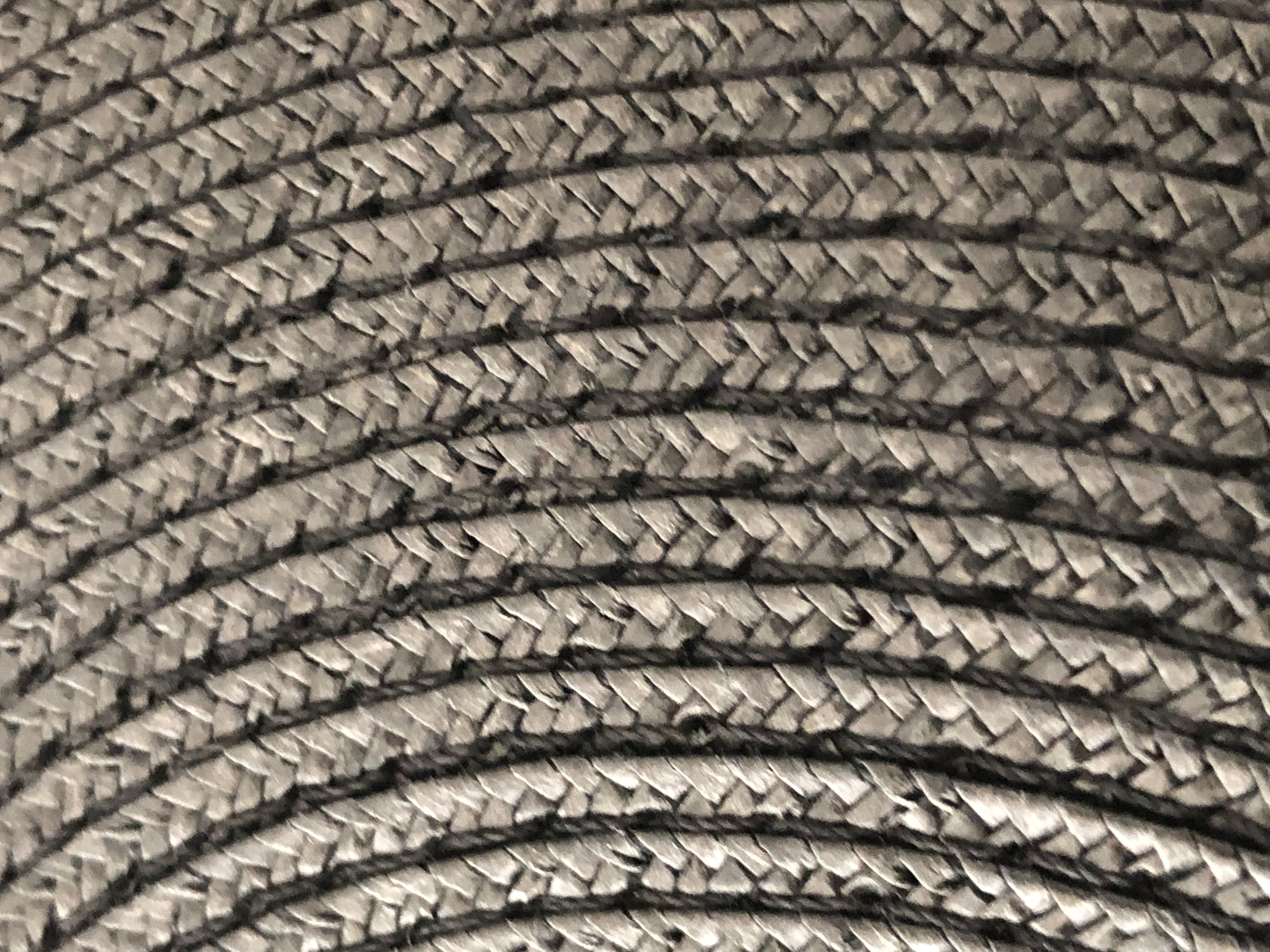
Giving an answer on why the translation in Japanese of straw varies compared to Italian is very difficult, however having a daughter who is graduating in Japanese I can say that the word straw has a precise translation in Japanese that has not been used by Borsalino. The reason is unknown to me, however both from the photographs it is evident that it is straw that in Italy often comes from the stalk of wheat. The weave used in the hat is typical of those used here to make summer hats, it probably comes from wheat and is a weave that seems to be sewn on a base. Clearly, having an interior photographer, it is possible to better understand the workmanship of the hat. Borsalino has almost always given Tesi, a Tuscan company, the contract for straw hats, considering that in Tuscany it has a long tradition in the production of straw hats, together with Montappone in the Marche.
There is also a museum, near Firenze, dedicated to straw hats https://museopaglia.it/index.php
Hope this helps
 

The Shoe

Call Me a Cab
Messages
2,698
Location
Wakayama, Japan
Giving an answer on why the translation in Japanese of straw varies compared to Italian is very difficult, however having a daughter who is graduating in Japanese I can say that the word straw has a precise translation in Japanese that has not been used by Borsalino. The reason is unknown to me, however both from the photographs it is evident that it is straw that in Italy often comes from the stalk of wheat. The weave used in the hat is typical of those used here to make summer hats, it probably comes from wheat and is a weave that seems to be sewn on a base. Clearly, having an interior photographer, it is possible to better understand the workmanship of the hat. Borsalino has almost always given Tesi, a Tuscan company, the contract for straw hats, considering that in Tuscany it has a long tradition in the production of straw hats, together with Montappone in the Marche.
There is also a museum, near Firenze, dedicated to straw hats https://museopaglia.it/index.php
Hope this helps
Thanks Daniele. That's very helpful.
The Japanese characters I write here may not show up on some computers and devices.
Indeed the word wara (藁) means straw. Wheat straw is mugiwara (麦藁). The Japanese word for paper is kami (紙). I've got two Bailey summer hats that are 50% paper and the label says bunruigaiseni (kami) 分類外繊維(紙)- unclassified fibre (paper). The strange thing with the Borsalino is that rather than use the common word for paper (kami 紙), they've used the far less common English loan word pepa (ペーパー). It's all very strange.
Anyhow, here is the inside of the hat.
IMG_3744.jpg
IMG_3745.jpg

IMG_3746.jpg
IMG_3747.jpg
 

Sterlingman

New in Town
Messages
1
Hello all,
I came across this site & thread while on my quest. I decided I'd join and post to see if anyone can positively identify the straw my hat is made of and if...better still, someone may know where to turn to have an exact replica made. First image is when the hat was still intact back in Oct.2014 on a fishing trip to the upper Selway River, ID. I've had this hat since badgering my brother out of it 40yrs ago. He won it on a Jersey boardwalk. It has now begun to separate at the top front & rear of crown and I'd really like to get another one....if at all possible, since we lost my brother back in 2010 at age 52. It's kind of become my moniker. Any help here is greatly appreciated ! It's quite a unique shape 3 1/2" wire edge brimmed hat with an interesting stitched vent. Front of stope is 6" while the back is 4 1/2" up from brim. This difference may be on account of how the very top of the hat has been shaped. Thanks in advance for any assistance !
IMG_0542.JPG
IMG_2533.JPG
IMG_2530.JPG
IMG_2526.JPG
IMG_2532.JPG
 

ShadowXY

One of the Regulars
Messages
105
Location
So Cal, USA
Some more information

This includes Milan


Ninety-nine percent (99%) of the straw hats we manufacture are actually handwoven using a man made fiber. The fiber is a twisted paper product that is coated with a plastic resin. The completed fiber is called "yarn." If the yarn is made in Japan, it is called Shantung. If it is made in China, it is generally referred to as "Toyo." Either way, the resin coated paper yarn is delivered to the weaving areas in Mainland China, where it is handwoven into the bodies we use to make the straw hats you find in your local store.

The other 1% of the handwoven straw hats we make are made of natural Toquillo straw fiber woven in the Monticristi and Cuenca regions of Ecuador. These are referred to as "Panama" hats.

Contrary to what you may see in the marketplace, there is no such thing as a "Shantung Panama." Our hats are handwoven in China using either Shantung or Toyo yarn (manmade) or handwoven in Ecuador using Toquillo straw (natural fiber).

The only real Milan Straw in the USA or Canada is sold by Optimo Hat Co.
Bump Great Info... The Mystery & Secrets of Straw slowly unfurls. I'll be reading this to the end although I seem to recall reading it in the distant past.
 

ShadowXY

One of the Regulars
Messages
105
Location
So Cal, USA
Update

Thanks to PanamaBob for the link to this older thread. Here's some more information regarding types of material used in making straw hats.

"A wide variety of natural and synthetic materials are used to make straw hats which give maximum comfort and pleasing style. Some of the better known soft straws are Open-weave Panama, New braids, Hanoki, Hemp, Peanit, Leghorn, Baku, Bangkok, and Madagascar.

Panama straws are body hats made of toquilla fiber, which is woven in Ecuador, Colombia and Peru. Quality depends on fineness and evenness of fiber and weave, cleanliness of fiber and firmness of brim edge. The finest Panamas are woven in Monticristi, Ecuador.

New braids are too many to enumerate. Originally most all came from the Orient. Today, an increasing number of new and sturdy weaves are coming from South American and the West Indies. Some are coming from Ecuador, and made of the Panama toquilla fiber, some from the coconut palms of the Bahamas, some from the Virgin Islands, and many from other tropical countries. Most have fine natural color, others are dyed in desired shades.

Hanoki is a lightweight, open-weave body straw hat, made of a Chinese wood fiber twisted into fine, ropelike strands, and woven. It is offered under a variety of trade names, can be blocked in a variety of felt hat shapes, and has a fine, mellow color.

Hemp material is light and resilient, and originates in Manila. It is machine-woven into open-weave, porous bodies. Close to 600 strands, each consisting of two or three twisted fibers, go into the finished hat. The Sisol Hemp is hand-woven in the interior of China, using Manila hemp.

The Split-Peanit is a body straw hat, hand-woven of split fibers obtained from leaves of the pandan tree, a palmata-like shrub that grows in Java. It is porous, light in weight, made of a strong, durable fiber and moderately priced.

Leghorn is a featherweight, open-weave hat made of specially cultured and woven wheat fiber, shipped from the port of Leghorn, whence it gets its name. The finer, upper portion of the the wheat stalk is plaited into Leghorn braid. This straw hat is light, durable, clear and bright in color.

Baku is a body straw hat made of Philippine fiber which is exported to China, and woven by Chinese experts. It is an extremely lightweight, porous, fine-woven hat, having the appearance of a fine mesh screen. In better weaves, it is also called Shantung.

Bangkok is another straw body hat made in the Philippine Islands. The fiber is obtained by stripping strands of the Buri Palm leaf into straws. The Buri Palm also supplies the fiber for Balibuntal hats. Balibuntal fiber is extracted from the stem and mid-rib of the leaf.

Madagascar is one of the lightest straw hats made, and is produced from a porous, water-resistant cloth made of split palm leaves, on the Island of Madagascar. Cloth is cut and sewed in various hat shapes.

Although the above constitute the better-known straws, there are many more."


http://www.hathistory.org/western/straw.html
The Straw Bible...
 

Forum statistics

Threads
114,670
Messages
3,179,803
Members
58,517
Latest member
atman
Top