Want to buy or sell something? Check the classifieds
  • The Fedora Lounge is supported in part by commission earning affiliate links sitewide. Please support us by using them. You may learn more here.

Retail pricing irritation

Messages
17,466
Just wanna add...

@Carlos840, aye, and things just keep getting worse, the more people look into it which is great that they do. I in no way support any of these companies nor would I ever (again) buy any of their stuff because in reality, paying thousands for luxury clothes does not guarantee a single thing anymore.

I wanted to explain to the OP what the exuberant price tags of brand name clothes should dictate in an ideal world but that the current circumstances of the high-fashion industry are disgraceful, they are.

The thing is, you sort of need to know what to buy from a certain high fashion brand in order to get most of it. Rather disgusting but say la wee, but Tom Ford suits are actually good. Not €7000 good but still the best RTW suit you can buy.

@greenc
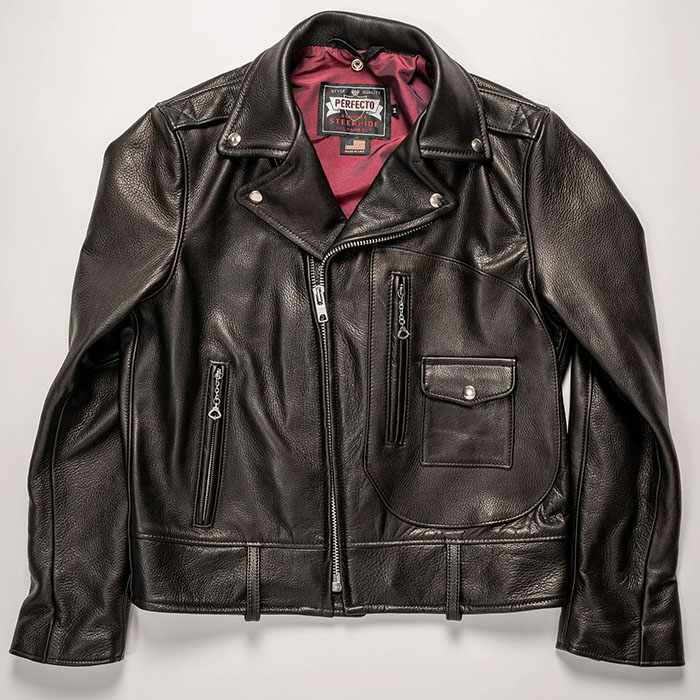
All good points plus there's also scarcity, too. If any jacket is worth $1700, Thedi is worth the $1700 but on the other hand, YSL's shiny oiled cowhide Perfecto is venerated mostly because it was made in a very small batch and as long as there are people willing to pay that amount of money for it, that's what it will be worth.

All of this is still better than the Bitcoin as at least you get something physical out of it and not just the shilling expertise of a crypto bro with a negative IQ.
 

greenc

A-List Customer
Messages
371
Just wanna add...

@Carlos840, aye, and things just keep getting worse, the more people look into it which is great that they do. I in no way support any of these companies nor would I ever (again) buy any of their stuff because in reality, paying thousands for luxury clothes does not guarantee a single thing anymore.

I wanted to explain to the OP what the exuberant price tags of brand name clothes should dictate in an ideal world but that the current circumstances of the high-fashion industry are disgraceful, they are.

The thing is, you sort of need to know what to buy from a certain high fashion brand in order to get most of it. Rather disgusting but say la wee, but Tom Ford suits are actually good. Not €7000 good but still the best RTW suit you can buy.

@greenc
All good points plus there's also scarcity, too. If any jacket is worth $1700, Thedi is worth the $1700 but on the other hand, YSL's shiny oiled cowhide Perfecto is venerated mostly because it was made in a very small batch and as long as there are people willing to pay that amount of money for it, that's what it will be worth.

All of this is still better than the Bitcoin as at least you get something physical out of it and not just the shilling expertise of a crypto bro with a negative IQ.
@Monitor thank you, I hear what you're saying and I want to respond to the thread with a really interesting article I read today by a luxury marketing strategist named Pam Danziger of Unity Marketing.

How Aspirational Overreach Killed the Goose That Laid Luxury’s Golden Egg​


Between 2009 and 2019, the personal luxury goods market nearly doubled in size, reaching $332 billion (€284 billion). Post-pandemic, it got another burst of growth, advancing from $342 billion (€293 billion) in 2021 to $431 billion (€369 billion) in 2023. But then it slowed to $423 billion (€364 billion) in 2024, according to Bain.

The dynamic industry growth from 2009 through 2023 has come at a cost. “In a race for scale, some of the soul of luxury was lost, as much of the industry traded exclusivity for reach, exchanging stability for volatility,” wrote BCG senior partner Filippo Bianchi in the latest BCG and Altagamma “True-Luxury Global Consumer Insights” report.

Aspirational Luxury Falls​

In 2025, the luxury market is looking down the barrel at its first major slowdown in 15 years, excepting the Covid years, and BCG puts much of the blame on brands’ overemphasizing the aspirational consumer segment.

A sizeable 35% of aspirational luxury consumers, defined as those who spend less than about $6,000 (€5,000) per year, have pulled back on luxury indulgence, diverting spending to savings and investments, wellness, second-hand luxury and trading down to more affordable fashion.

“The segment that previously fueled growth is now revealing its fragility. Around 50% of these consumers now feel financially vulnerable,” Bianchi continued.

Brands that are most dependent on aspirational luxury are in the crosshairs. “Brands with a client base comprised of more than 50% Aspirational consumers are seeing the steepest declines, underperforming sharply over the past 12 months.”

While BCG doesn’t name names, one doesn’t have to look far to find suspects. LVMH’s fashion and leather goods segment, anchored by Louis Vuitton, fell 5% in the first quarter and Kering, led by Gucci and Yves Saint Laurent, was off 14%.

Polarized Results​

Luxury brand performance is increasingly becoming polarized, with more brands falling behind than pulling ahead. That gap will continue to widen, as Bain forecasts up to a 5% decline in the luxury market by the end of the year.

Nonetheless, luxury brands continue to rely on marketing to the weakening aspirational consumers, who generated some 60% of the market’s revenue in 2024, largely at the expense of alienating the most empowered consumers at the top of the luxury consumer pyramid.

Those at the top spend over €5,000 on luxury per year and produce 40% of luxury market sales, according to BCG. And the very top-tier clients, defined as spending €50,000 or more annually, make up greater than half of that or 23% market share.

“To succeed in the years ahead, brands must refocus on top-tier clients and return to the fundamentals of what true luxury really means,” Bianchi advises.

Brands that have stayed true to luxury fundamentals are reaping the rewards, like Brunello Cucinelli, which ended 2024 up 12%, as well as Prada (+13%), Hermès (+9%) and Richemont (+8%) in the most recent quarter.

How Luxury Brands Are Failing Top-Tier Clients​

Based upon a survey of 7,000 worldwide luxury consumers and qualitative research with top-tier customers, BCG has identified four primary ways that brands are falling short in serving their very important customers’ expectations and needs:

• Too Much Marketing, Too Little Personalization​

Some 60% of luxury consumers feel overwhelmed by excessive marketing and generic mass communications. In brands’ efforts to attract attention through marketing, they are attracting the wrong kind of attention: turning key clientele off and causing them to disengage.

“What they value is not outreach, but tailored interaction – built around their personal context, taste and lifestyle,” BCG advises. The call is for more person-to-person clienteling, which can be aided by AI, yet AI is no substitute for the personal connection.

• Crowded, Standardized Retail Experiences​

An overwhelming 80% of luxury consumers feel alienated by overcrowded, impersonal retail environments and prefer interacting with luxury brands in exclusive, dedicated retail spaces that offer privacy, calm and high-touch service. It’s hard – if not impossible – to deliver client intimacy at scale, but that is what these very important customers expect.

• Poor Product Quality And Noticeable Defects​

Luxury products are most highly valued for their craftsmanship and quality, yet 89% of luxury consumers believe they are not getting it. Product excellence suffers from increased industrialization in the industry and its focus on volume production rather than on ultimate quality and value.

• Lack Of Recognition of Top-Tier Status​

Top-tier clients expect the brands they interact with to recognize and treat them as the very important customers they are. Some 70% believe they are not correctly identified as such across channels and regions.

Much of the blame is placed on brands’ CRM systems and how they are segmented and targeted. Brands need to do a better job in their data analysis to refine their segmentation models so very important customers are recognized and treated as such.

Realign To Top-Tier Clients​

The way forward for luxury brands is to return to luxury’s first principles. Unfortunately, many brands have veered from its core values in their pursuit of growth fueled by aspirational consumers.

“The luxury brands that will win in the years ahead will be those that have the courage to center their strategy around the core, delivering excellence to the clients who define what true luxury means,” Bianchi said.

Luxury brands must return to what has always made luxury exceptional: personal relationships and recognition, special client experiences and ultimate quality.

Bianchi concluded: “To meet and retain top-tier clients, brands must recalibrate – not through scale, but precision; not through ubiquity, but intimacy. In doing so, they’ll take a crucial step toward building a strong luxury industry by returning to what made it exceptional in the first place.”

I think this is all very interesting and telling - the aspirational buyers are now not shopping the way they once did.
 

greenc

A-List Customer
Messages
371
To add to that article - and I do apologize to anyone who found that too long, or a tedious read - in another piece she put out the following...

"Besides the obvious flashpoints creating uncertainty in the market, including rising geopolitical tensions, currency fluctuations and volatile economic pressures, luxury consumers are disillusioned by the industry’s offerings, particularly after post-pandemic price increases threw a monkey wrench into brands’ traditional price-value relationship.

“There’s a sense of emotional detachment, even among the wealthy, who can’t explain why the same bag that cost $1,200 before now costs $2,000 – prices are too high for such a low level of creativity,” Bain’s senior partner Federica Levato shared with me. “The disillusionment and detachment we talk about is particularly noted among younger consumers.”

"...Because the U.S. is the world’s richest market – last year 1,000 new millionaires were minted here each day, totaling nearly 400,000, and more than half of all new millionaires globally – and the largest personal luxury market by far – the Americas totaled about $115 billion last year with the lion’s share in the U.S., compared to $51 billion in Mainland China – what happens here will have a profound impact on the global personal luxury market overall.

According to the Affluent Consumer Research Company’s May luxury tracking survey, luxury consumer fatigue is measurable. Specifically, 52% of the roughly 200 affluent Americans with incomes of $250,000 and above reported being disappointed with luxury options, and 46% were unable to justify new purchases.

But most telling is that among those affluents who tend to opt for the luxury option most often, 55% said they’re bidding their time, and the same 55% share signaled that the available options simply do not move them.

“Purchase hesitation isn’t one-size-fits-all,” observed ACRC’s founder and CEO Chandler Mount. “At the top of the market, it’s not about affordability – it’s about emotional resonance. They’re bidding their time, a signal of flexibility, not resistance. Yet, there remains a lack of enthusiasm and emotional draw for affluent consumers.”

For the full article please go here: https://unitymarketingonline.com/luxurys-luster-fades-as-consumers-emotional-disconnect-deepens/

Enjoy the weekend everyone, and thank you all for the responses over the last week to this thread, I appreciate everyone sharing. Take care.
 

Doctor Death

One of the Regulars
Messages
117
I certainly share your irritation at those companies selling at ridiculously marked up prices. But they must be doing it because there are (even crazier) people who are willing to pay those prices. You just have to hope that it doesn't drive inflation up for everything else, but chances are that it will. I just do my part and not buy crazy stuff at ridiculous prices and, whenever I get a chance, tell people to do their research and not pay those ridiculous prices. Some will listen and some won't. Nothing more we can do about it. Well, there is one other thing we can do. We can complain about it here, of course!
 

Forum statistics

Threads
114,464
Messages
3,175,157
Members
58,308
Latest member
Truthe Trust Love
Top