Want to buy or sell something? Check the classifieds
  • The Fedora Lounge is supported in part by commission earning affiliate links sitewide. Please support us by using them. You may learn more here.

Interesting Method for Repair of "Some" Zippers

raf

One of the Regulars
Messages
250
This "may" allow some zippers whose damaged "tape" (the usually fabric part of the zipper) part of the zipper, at the bottom to be repaired. As always, depends on how well the repair is done.

Vid:

Glue used is liquid (not Gel) "crazy glue" commonly available. Suggest that an inexpensive set of forceps is ideal clamping tool. Be careful to not "over-do" the thickness of reinforcement material (suggest polyester), lest too-thick material prevent full engagement of the slider with the stationary zipper "post". Placing some masking tape over the parts not intended to be glued might be wise.

Zipper replacements can be expensive. Above "may" be a "possible" alternative to full zipper replacement or give some time to save up for a complete zipper replacement.

Posted for consideration.
 
Last edited:

raf

One of the Regulars
Messages
250
I'm guessing that what auto censor deleted with***s was h o t g l u e

if so, please expand, always willing to learn.
 

Fiedi

Familiar Face
Messages
55
? Can you be a little less cryptic and a bit more explicit? if this technique doesn't work, please save folks from wasting their time.
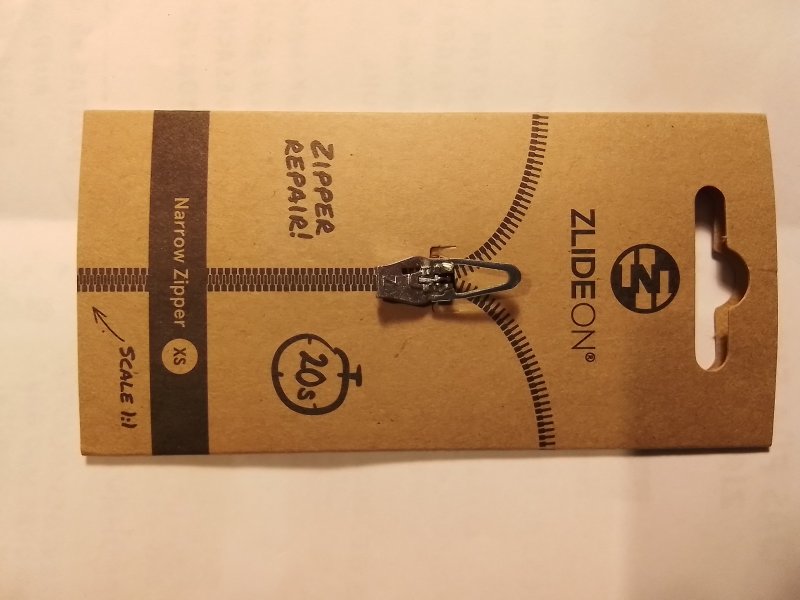
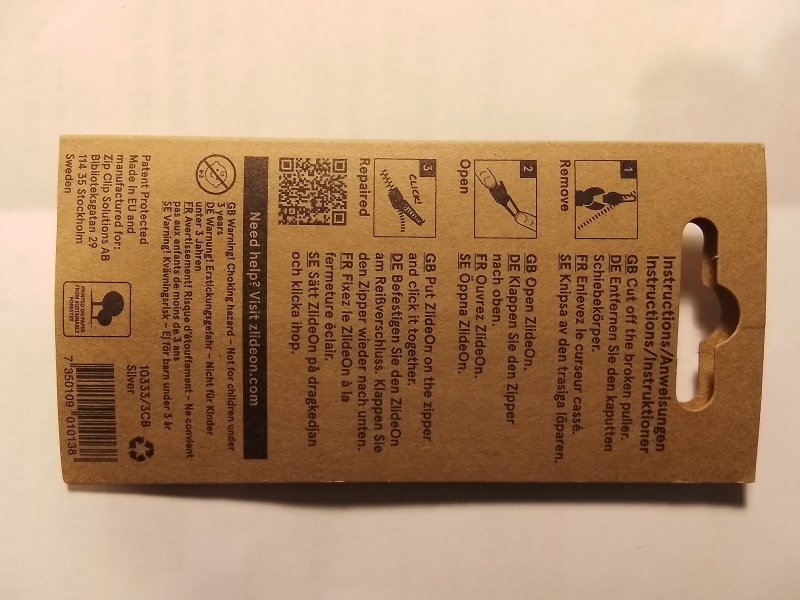
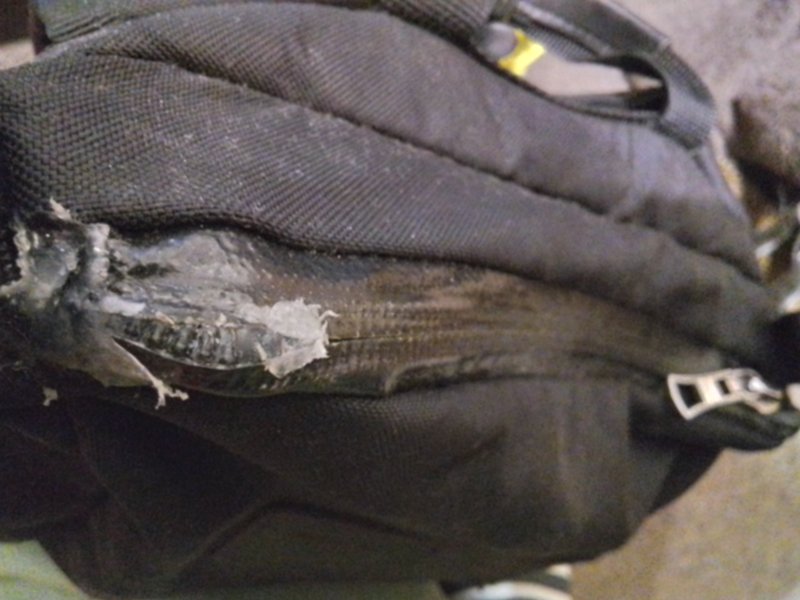
Hi, bought this zipperslider repairkit on the homepage careofcarl, didn't try so far but seemed interesting to me. Besides I made the experience to repair a clued zipper on a backpack of japanese brand masterpiece with hotgluepistol, not really beautiful but practical...
 

Attachments

  • 20251116_161036.jpg
    20251116_161036.jpg
    1.7 MB · Views: 77
  • 20251116_161101.jpg
    20251116_161101.jpg
    2.1 MB · Views: 79
  • 20251116_161923.jpg
    20251116_161923.jpg
    1.4 MB · Views: 72

tamoko

One of the Regulars
Messages
125
Location
swiss

Hot-melt adhesive​

This hot polymer glue work great on Zipper end. Need some patience to make right just tray on some piece of cloth first
 

Fiedi

Familiar Face
Messages
55
K
This method may temporarily repair zippers with damaged tape at the bottom using liquid glue and thin reinforcement material, but care is needed to avoid interfering with the slider. It can be a cost-effective alternative or a stopgap before a full zipper replacement.
Hi, yes I just tried the hotglue as you mentioned at the end of the zipper as a kind of stop for the slider, because it was not possible to find someone to repair or change a sealed waterproof zipper. So I gave with this not really easthtically nice but pragmatically for me acceptable repair a longer life to this high quality backpack...
 

Behemott

Familiar Face
Messages
91
Location
Canada
Hi,


I have seen this tip posted 3-4 times on other sites, and since I've worked extensively with Ca glue (yeah is possible), I just can't convince myself that this technique is effective. A torn zipper tape is the result of forces being applied in the same way to the same spot repeatedly, which in my opinion will only lead to the same result. Ca glue isn't designed for this type of tearing force. Unless the goal is just to prevent more propagation but without further usage.

My 2 cents...

D
 

Fiedi

Familiar Face
Messages
55
Hi,


I have seen this tip posted 3-4 times on other sites, and since I've worked extensively with Ca glue (yeah is possible), I just can't convince myself that this technique is effective. A torn zipper tape is the result of forces being applied in the same way to the same spot repeatedly, which in my opinion will only lead to the same result. Ca glue isn't designed for this type of tearing force. Unless the goal is just to prevent more propagation but without further usage.

My 2 cents...

D
The hotglue-method is just in my certain case an opportunity I think. If you need proof and stability a zipper should be sewn in no question because the chain will always break at the weakest point of corse
 

Behemott

Familiar Face
Messages
91
Location
Canada
Yes, I agree, a temporary solution... okay.

And concerning vintage garments, glue is not pleasing aesthetically, especially on vintage zipper tapes, it ruins the appearance in my view.

D
 

raf

One of the Regulars
Messages
250
As originally mentioned, this technique "may" be feasible on some zippers, depending on the degree of damage existing. The less the damage, the more likely the technique is to be effective.

Yes, a short-term "fix", and I would consider a "correct" zipper replacement on an Original garment to be in order, even if this technique is used as a stopgap. I would assume that the person making such a repair would use material matching the color of the fabric on the zipper itself.

IMHO, one of the reasons why zippers on A-2 jackets eventually fail at this point, in addition to frequent use is the lack of a lower snap connecting wind flap to the bottom leather zipper tab. Installing a Line 24 black oxide finished, all-brass snap at this point will, to the extent it is used, act as a strain-relief for the bottom of the zipper and reduce tension/wear at this point. The elastic hem of the jacket is always trying to pull the zipper apart at this point, especially when user is seated, so adding the bottom snap seems wise to me. I would not add a snap to an Original jacket, even though I believe that the omission of such a snap was a mistake in the original Specs.

An externally visible black oxide snap added to the bottom of the wind flap is scarcely noticeable on black or seal brown jackets. Installer can carefully cut open the bottom of the wind flap, install a "hidden" female portion of the snap (as with the flaps on the patch pockets), then glue/sew up the stitching on the wind flap.
 
Last edited:

Behemott

Familiar Face
Messages
91
Location
Canada
Hello,

Interesting observation.

The entire USAF L-2 lineup was made with a reinforcing snaped flap preventing damage to the lower zip section.
it became obsolete when the beefier #10 zip was introduced to B-15C's and up.

I think that most of the damage seen on insert/box pins are due to misuse. A zipper is pretty strong once correctly engaged.

Some Conmar and especially Crown #5 M42 Achilles' heel are at the box section, they need special care when inserting the pin etc... Even Buzz Rickson's #5 Crowns (M42-M48) zips are frail, but that's another subject.

Regards,

D
 
Last edited:
  • Like
Reactions: raf

Fiedi

Familiar Face
Messages
55
Hello,

Interesting observation.

The entire USAF L-2 lineup was made with a reinforcing snaped flap preventing damage to the lower zip section.
it became obsolete when the beefier #10 zip was introduced to B-15C's and up.

I think that most of the damage seen on insert/box pins are due to misuse. A zipper is pretty strong once correctly engaged.

Some Conmar and especially Crown #5 M42 Achilles' heel are at the box section, they need special care when inserting the pin etc... Even Buzz Rickson's #5 Crowns (M42-M48) zips are frail, but that's another subject.

Regards,

freestar
Report Ad
Hi, when I read the last post and the one with the RiRizipper I asked myself if zipperproblems have something to do with the kind of zipper used as I have made the experience there are different zippers according to thread the one sliders side into the other, which is sometimes in ads referred to as "american zipper" like in a Woolrich Fiedjacket I got and which feels for me like upside down when I close the jacket compared to other jackets e.g. with RiRizippers ("european style" zippers?) - the difference is with which hand you put the both sides or exactly the slider of the zipper togehter with the other side when closing it... as I am righthanded the so called "american zipper" is not as convenient for me and sometimes causes little problems when I close it with the result that the cloth of the zipper on my fiedjacket is slightly torn at the sides where to thred the zippersides together... Is this another reason for the lifetime of zippers? I think you can compare it a bit with trying to cut with lefthand scissors if you are righthanded..

Long speech short sense, I asked myself if you have similar experiences with zippers and on the other hand is there a special reason for this dfferent kind of zippers? Maybe it's just my habbit to use "european" zippers or do you experience the same difference when using the different zipperstyles? If you got the habbit to use "american zippers" is it even more convenient to change to a "european style" if you are righthanded? And is that circumstance worth to consider if you have a zipper on your jacket to be renewed?
 
Last edited:

Behemott

Familiar Face
Messages
91
Location
Canada
Allo,

Interesting point, but I think you may be overthinking it. To me its more how gentle you are with them. Model, size or side is secondary. They are tiny mechanical wonders in a way. A lot of engineering when into developing them.

All of the modern zippers I had to deal with a repair were almost 100% my fault with some exceptions. Talking mostly about hiking equipment, bags and jackets. Winter gear gets the most wear and can fail, in my case, pullers torn off, when its freezing you are less patient, lol.

I love vtg zippers and hardware in general, mostly military garments etc. And see them as an important part of the entire kit. Crowns are my favorite, any models. But they require special care and attention.

I have a late war USN N-1 that has the Talon tape totally dry and started to tear with usage.
I also have a couple of M43 #5 Conmars (USN G-1) with a torn puller, easy repair but will stay fragile.
I have seen a lot of #10 Crowns (the big one) on B-15D that tears at the pins. Search on the internet, easy find.
Same thing on my original Aero A-2, #5 Crown starting to tear at the pin.
Guess it comes with the hobby!

Cheers

D
 

Fiedi

Familiar Face
Messages
55
Hi, I think with zippers on old jackets it's like with any (natural) material which will not getting better with time, as a rubberband never streched for long time will break immediately as you try it the same effect you have with cloth e.g. socks you didn't wear for longtime and on vintage jackets it's not always to find the best quality zippers - don't misunderstand I don't compare a quality vintage jacket to cheap socks but I think it's the same as with other quality vintage goods, the maker used the components they could get and in the quality they could get them. I think it's not only how to use something and me I am quite careful with zippers. According to my experience the zippers are the most senitive point on vintage leather jackets, why I am not a real fan of vintage jackets as one with good lining and zippers will be really expensive and often not of better quality as a high quality copy.
But concerning zippers, which are the topic: as I tried to explain before, if I use the "american style" zipper, which I am not used to it feels as if I tried to play a lefthand guitar...
 
Last edited:

Peacoat

Bartender
Messages
7,084
Location
South of Nashville
Hello,

The entire USAF L-2 lineup was made with a reinforcing snaped flap preventing damage to the lower zip section. it became obsolete when the beefier #10 zip was introduced to B-15C's and up.

I think that most of the damage seen on insert/box pins are due to misuse. A zipper is pretty strong once correctly engaged.

Regards,

D
Yes, the #10 zipper is heavier and what I replace the fragile Aero "period correct" #6 zippers with when they break. But, I think the tape on the #10 is the same thickness as the tape on the #6. So that problem area remains.

I don't see that the use of the #10 zipper would obviate the need for the "snapped flap" at the bottom of the zipper to protect the tape from stress when the wearer is seated. But then maybe I am not correctly understanding that paragraph.

While commenting in this thread, I need to mention a subject dear to me. And that is the European, Great Britain and Canadian jackets and coats that have the puller and the slider installed on the wrong side.

It seems obvious to me that the majority of the population, being right handed, prefers having the puller and the slider installed on the right side of the zipper tape, with the female end on the left side. Much simpler to use the dominant hand to manipulate the hardware and place it in the exact location it needs to be.

In fact, the original inventor and patent holder for the zipper, Whitcomb Judson, from Chicago, didn't give the puller and slider placement a second thought. His reasoning was the same as mine: The majority of the population is right handed, so let's make it easier for them to manipulate this zipper. This was all the way back in the late 1800s.

But yet today, we somehow have the Europeans, Great Britain and our northern neighbors, reversing and b a s t a r d I z n g* the zipper placement.

What an awkward arrangement that is for a right hand dominant person. One of my quality leather jackets, maybe an Eastman, has this zipper placement. I did, however, find a simple solution to this problem: I just don't wear the jacket. Simper than having to fiddle and fidget with the backwards zipper placement.

Unfortunately, that solution isn't available to me with my Canada Goose down parka. When it is really cold on NFL Sundays, I really have no choice but to s u c k** it up and labor with the backwards zipper on that otherwise excellent Canadian product.

Hopefully, the rest of the world will wise up and return to the placement of the puller and slider to the side for which it was originally intended. Unfortunately, I doubt that will be in my lifetime. Meanwhile the US zips its jackets with ease, and the rest of the world struggles.
––––
* This is intended to defeat our word censoring bot; he isn't very smart.
** More of the same for our bot of limited intelligence.
 

raf

One of the Regulars
Messages
250
I concur that the cloth tape to which all zipper components are attached is always the weak point. Many new zippers have a "U" shaped strip of plastic wrapped around the bottom of the zipper tape, at least on the post side. Some other zippers seem to have some sort of plastic infused into the same area.

It seems unlikely that mfrs of quality zippers, at least, would go to the expense of adding such reinforcements if this was not known to be a "trouble spot"

I have not tried this, but it's possible that carefully infusing some liquid Cyanoacrylate (CA) glue, or even flowable epoxy onto the bottom tape of a fairly new, undamaged zipper lacking such factory reinforcement might prove useful.

I don't know if the thickness of zipper tape varies with the size of the zipper. Surely, thicker tape would be better concerning this application.

FWIW, since my LL Bean A-2 lacks a top wind flap "Hook" Assy, I may add a top snap to the wind flap, along with a similar snap at the bottom of the wind flap.
 

Behemott

Familiar Face
Messages
91
Location
Canada
I don't see that the use of the #10 zipper would obviate the need for the "snapped flap" at the bottom of the zipper to protect the tape from stress when the wearer is seated. But then maybe I am not correctly understanding that paragraph.

Simple really, the beefier the metal part is, more surface is attached to the tape. And the tape on #10 Crowns is thicker than the #5, at least the ones I own NOS and on the B-15-N2-N3. I'd put Conmar and Talon in there too.

Now why they removed the snapped flap... Maybe it wasn't that effective to prevent what we think it was for... I was just speculating about it by the way. On the thousands jackets made, zippers breakage percentage may have been very low in the 50's time frame or life cycle of the garment.

D
 

Peacoat

Bartender
Messages
7,084
Location
South of Nashville
Simple really, the beefier the metal part is, more surface is attached to the tape. And the tape on #10 Crowns is thicker than the #5, at least the ones I own NOS and on the B-15-N2-N3. I'd put Conmar and Talon in there too.

Now why they removed the snapped flap... Maybe it wasn't that effective to prevent what we think it was for... I was just speculating about it by the way. On the thousands jackets made, zippers breakage percentage may have been very low in the 50's time frame or life cycle of the garment.

D
It makes sense that the larger zippers would have thicker tape. I didn't get mine out to see if there was a difference; I just didn't think about it.
 

Forum statistics

Threads
114,642
Messages
3,178,948
Members
58,470
Latest member
DRBB
Top