Want to buy or sell something? Check the classifieds
  • The Fedora Lounge is supported in part by commission earning affiliate links sitewide. Please support us by using them. You may learn more here.

Guys In Girls' Garb

vitanola

I'll Lock Up
Messages
4,246
Location
Gopher Prairie, MI
cover-front.jpg


And then there's Rae Bourbon, a very popular nightclub performer from the 1930s thru the 1960s, with an extremely risque song-and-dance act. Bourbon's "party records" were very popular thruout this period, featuring such selections as "You're Stepping On My Eyelashes," "Queen of the Navy," "Where Does The Difference Come In?" and "Don't Call Me Madam!"
Though I've never made a particular study of party records I've acquired quite a number over the years simply due to their ubiquity. A plate of Burbon's which was often issued under the title "Her First Music Lesson" is one of the funnier bits, though of course it doesnt hold a candle to the "Canadian Record", sometimes known as "The Battle at Trillblow".

That said, by the mid-1930's the sorts of acts had become quite specialized, and rather out of the mainstream. Such was not the case in the first decades of the last century. Julian Eltinge, who made his Broadway debut in 1904, was a star of the first rank, anchoring numerous popular Brodway successes, repeatedly headlining at Keith's Palace, and receiving $5000 a week playing Keith time in the two-a-day Vaudeville. In the 1910-1920 decade there were at least three other such impersonators in the top rank of the profession, though Eltinge was the acknowledged master. Heck, he even had a major (and surviving) Broadway theater named after him in 1912.

This type of entertainment was immensely popular in the years before the Legion of Decency (so called) held the nation in its thrall.
 
Last edited:

LizzieMaine

Bartender
Messages
35,416
Location
Where The Tourists Meet The Sea
new-york-city-burlesque.jpg


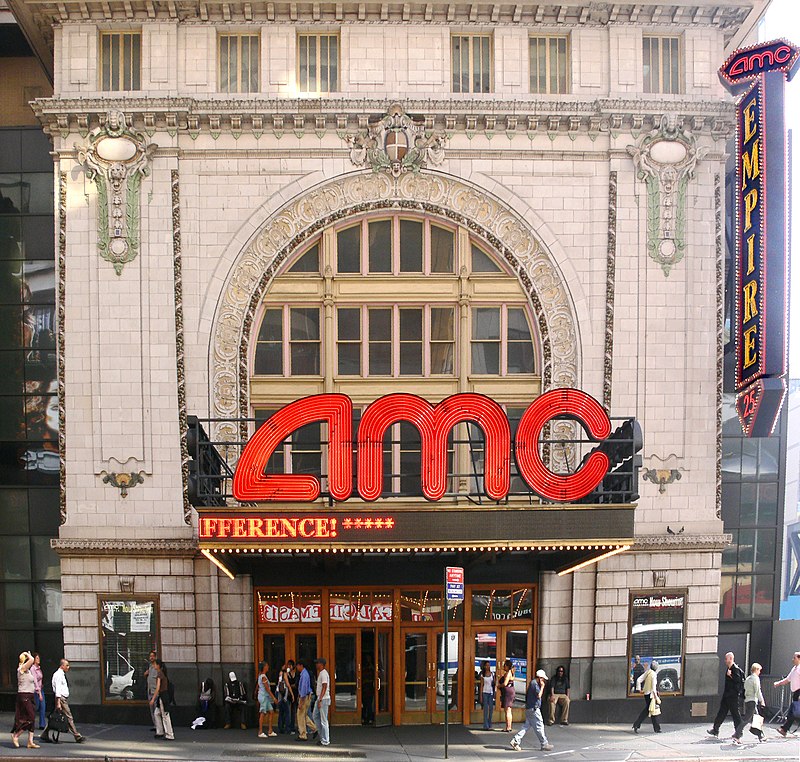
The Eltinge became a burlesque house in the 1930s, which couldn't have pleased Eltinge himself, given his reputation as a "clean" family-oriented performer. After Mayor LaGuardia cracked down on the burly-Q, it became a moom pitcha house, renamed the Empire, and remains such today.

800px-AMC_Empire_25_NYC.jpg


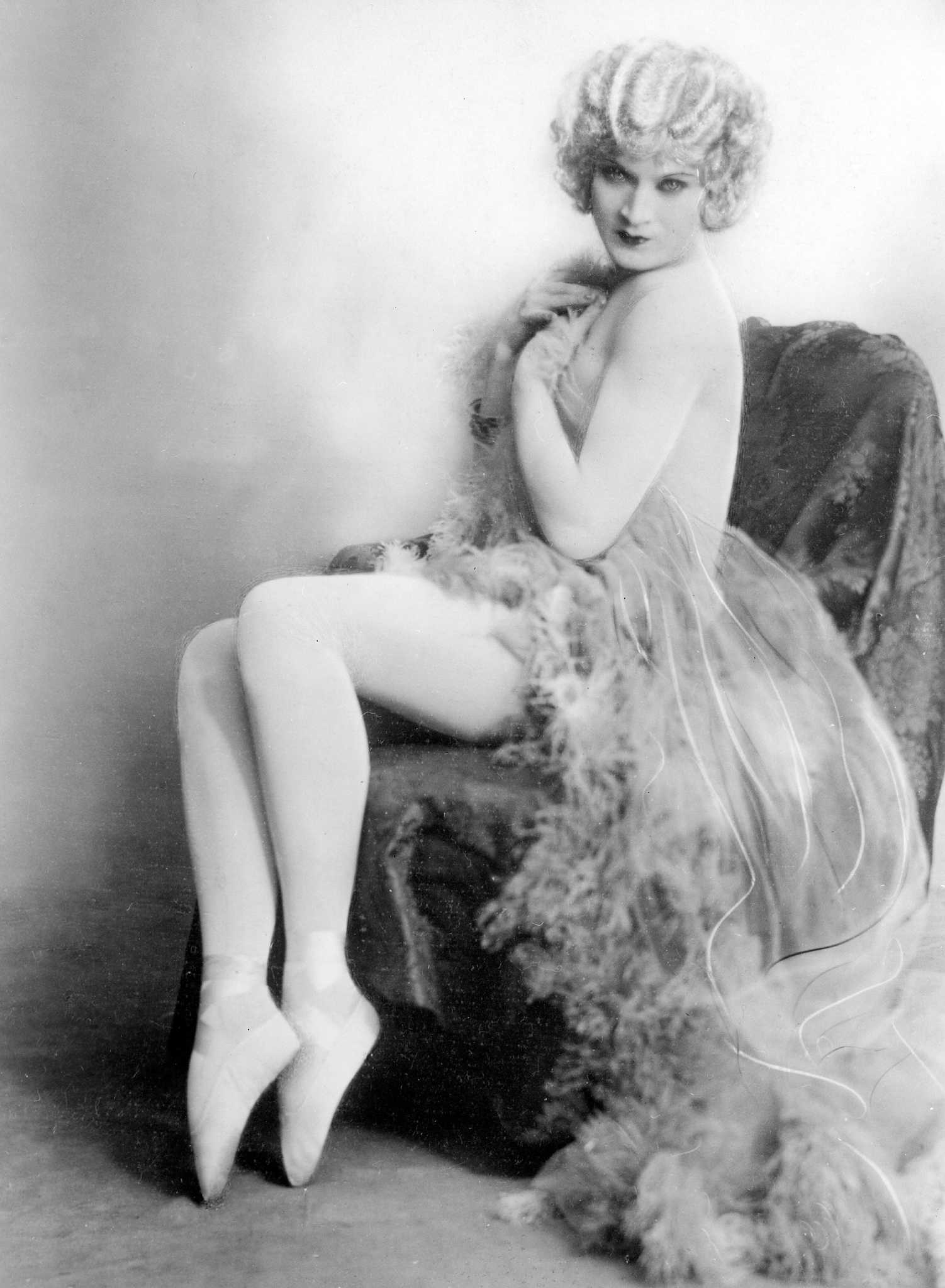
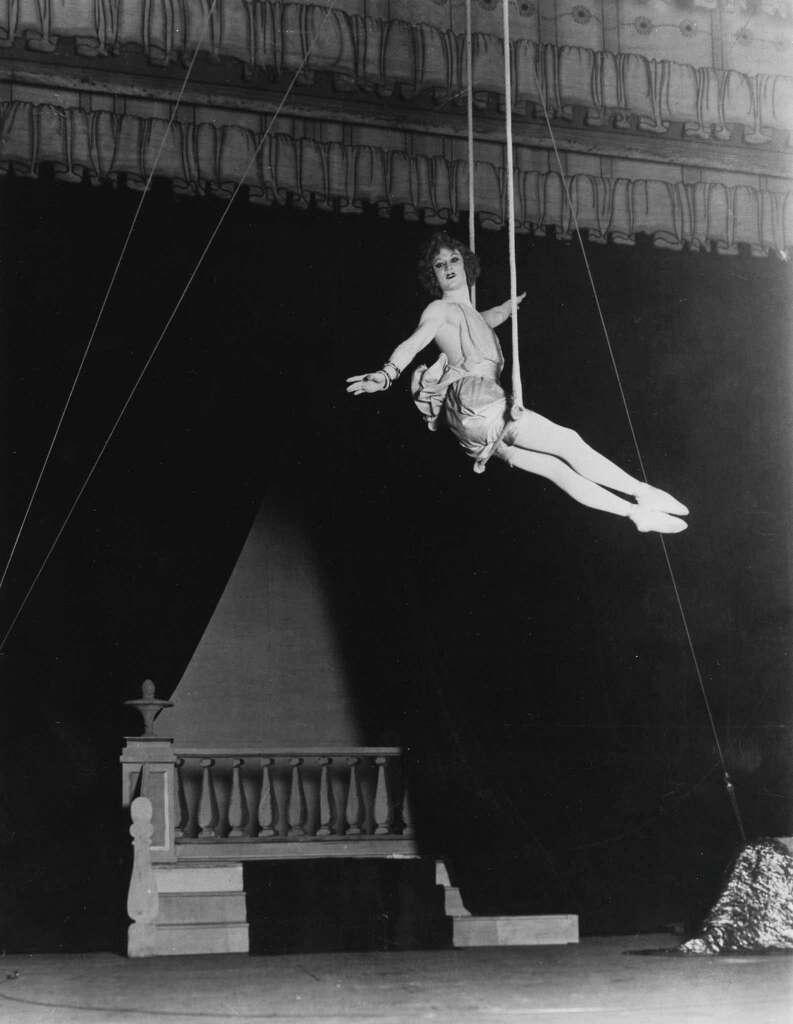
In addition to a Broadway theatre bearing his name, Julian Eltinge also had his own line of licensed merchandise, including his own personally-endorsed beauty products.

32d29757db5b613fdc1f6f23e8d212cf--transgender-s.jpg
 

LizzieMaine

Bartender
Messages
35,416
Location
Where The Tourists Meet The Sea
Female impersonation was also not uncommon in radio. There were several male performers who were well-known for performing female roles on the air, notably Marlin Hurt. He had been a member of the novelty vocal trio "Tom, ****, and Harry" in Chicago radio during the 1930s, and it was while with this group that he developed a distinctive, nasal female voice characterization. He fooled around with this voice for a while and in 1939 joined the cast of Red Skelton's program as a sassy Jewish character called "Gypsy Rose Levy." This didn't last long, but he continued to use the basic voice with other dialects on various programs. By 1941 he'd settled on an African-American dialect, and was calling the voice "Beulah." He joined "Fibber McGee and Molly" in 1944, and Beulah became a national craze -- during the live broadcasts he'd stand with his back to the studio audience until "Beulah" got her cue, and then he'd whirl around and bellow, in a perfect A-Flat, "Somebody bawl fo' Beulah?"

Hurt spun off into his own program in 1945, but he died of a sudden heart attack during its first season, and was replaced by another young white man, Bob Corley -- who could do a close imitation on the voice, but wasn't as clever a comedian. Neither Hurt nor Corley ever dressed up as Beulah on stage -- the shock value of seeing the voice coming out of an obviously-male mouth was enough for the studio audience.

Another cross-gender performer was Tommy Riggs, a former college football player who had the unique ability to switch his voice to that of a six-year-old girl -- not a falsetto caricature, but a real little-girl voice. He used this voice to amuse his teammates by having "her" explode in obscene tirades, and after graduation found his way onto the Rudy Vallee program, doing mild comic dialogues between "Mister Tommy" and "Betty Lou." The uncanny quality of the simulation convinced millions of people that Betty Lou was a real little girl, and Riggs got his own program that ran on and off thru the 1940s.

And finally, there was Olin Landrick -- who had taken up female impersonation during his World War I service in the Navy, and pursued it on stage as a professional during the 1920s. He turned to radio in the thirties, specializing in female roles, and had his most famous part as a comedy-relief busybody on a western called "The Sheriff." There was no particular reason to cast a man in that role, and no particular attention was called to him in the publicity for the program -- in fact, he changed the spelling of his first name to "Olyn" in press articles to make it more gender-ambiguous.

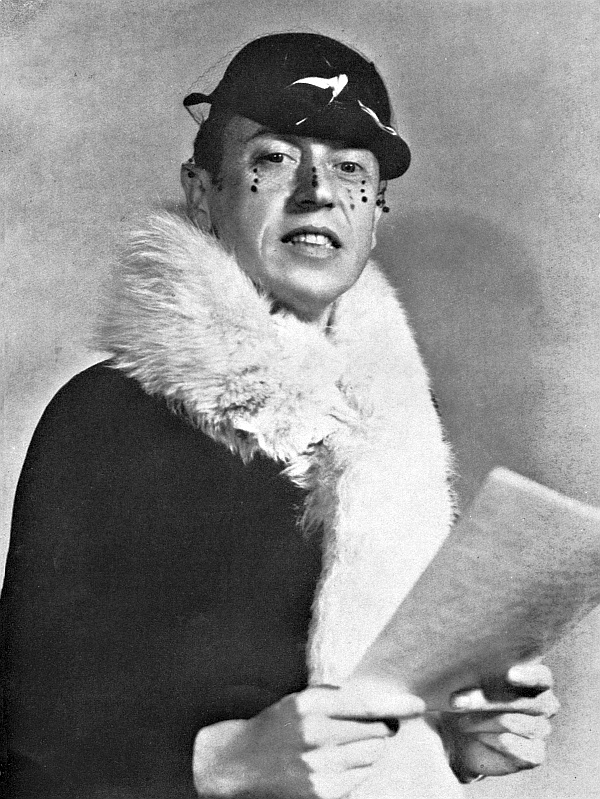
And in a class by herself was "Tizzie Lish," a wild parody of every radio cooking/home economist personality ever broadcast. She was actually Bill Comstock, a west coast comedian who began playing the character on a local morning show in Los Angeles in 1931, and was still at it thirty years later. Unlike the above performers, Tizzie dressed for her broadcasts, wearing the same hat, dress, and molting feather boa for her entire career.

tizzielish.jpg


Comstock performed the character with a high, fluty falsetto voice, giving ridiculous recipes and unhelpful household hints on dozens of different programs over the decades, and was still at it in fifties and sixties television. "Hello, folksies!"
 

GHT

Messages
10,513
Location
New Forest
The British version of Dancing With The Stars, namely: Strictly Come Dancing, has four judges. One of the male judges name of Craig Revel Horwood, has portrayed a Mr. Nasty attitude, I guess it gets him attention and his name in the tabloids. But you have just got to see him in drag.
craig revel horwood m.jpg
craig revel horwood f.jpg
 

Edward

Bartender
Messages
26,293
Location
London, UK
The idea of a car seat having a gender is the most ridiculous thing the Boys have ever come up with. A seat only has gender if you're speaking French.

I'd have agreed, until the brought out gendered Lego...

This seems to be a more common phenmeon than today (men dressing in women's clothing for comedic purposes). When did it fall out of fashion? The only modern movie I can think of that makes this reference is Mrs. Doubtfire... and that's not recent.

Drag is still a very popular entertainment form here in the UK, especially with (but far from limited to) the LGBTQIA community. It has of course long, historic links to the theatre and entertainment more generally. The most mainstream examples would be pantomime, of course, though the (frankly risible) BBC sitcom Mrs Brown's Boys centres on a drag performance. Very popular, but very poor as well in that it never gets beyond the level of "Psst! I'm really a man!" in terms of the sophistication of its humour. The main differenced I've seen these days in drag here in something of a recalibration in some circumstances to avoid performances prejudicial towards the trans community. Although I'm sure not intended that way, I doubt the Emily "I'm a lady!" skits from Little Britain twenty odd years ago would be presented in the same way now.


Rocky Horror remains a significant subculture. Dr FranknFurter rather challenges the notions of drag, certainly the narrow definition of drag as seeking to pass as 'impersonation'. Frank, hen done ell, is aggressively butch and very much a man, his adoption of female garb both an alien's either uncaring ignorance of or contempt for earthlings' gender role stereotypes, and also something of a provocation. A lot of fun to be had unpacking that. In my view, Curry's iconic image was always an opposite number to Dietrich in the white tie and tails: just as she wore such masculine clothing in a way which very much emphasised her femininity, Curry's aggressive masculinity in that role was enhanced by the juxtaposition of the female garb.

Back to James Whale's Bride of Frankenstein in the early 30s. English actor Ernest Frederic Graham Thesiger (15 January 1879 – 14 January 1961) who played Doctor Septimus Pretorius in that picture also made a drag appearance in Noel Coward's On With The Dance in 1925:

1775141168166.png
 

Edward

Bartender
Messages
26,293
Location
London, UK
Away from the stage, of course it's a long established fact that the types of soft hats generally known as a 'Fedora' or a 'Trilby' both started out being intended for women - and both, indeed, take their popular names from female characters who were depicted wearing them on stage - Fedora after Princess Fedora in Victorien Sardou's play, Fedora, and Trilby after the eponymous heroine of Paul M Potter's Trilby, an 1895 stage adaptation of du Marnier's 1894 novel. As best I understand it, it was markedly into the 20th century when these came to be adopted by men, in much the same way as the wristwatch began as a ladies' item, before being adopted by men, thereafter gradually replacing the pocketwatch as the dominant form of time piece favoured by men. Fedora premiered in Paris in 1882, the very same year as Oscar Wilde purchsed for himself (I believe from Lock & Co) a fedora which he wore on a lecture tour of the USA:

1775233535190.png


Wilde's particular form of dandyism was of course generally regarded as quite effete at the time, but this hat in particular would have really been rather within the context of womenswear at the time.
 

Forum statistics

Threads
114,554
Messages
3,177,088
Members
58,383
Latest member
rupam03
Top