niv
Familiar Face
- Messages
- 52
- Location
- Austin, Texas
I broke horses when I was younger - miserable way to make a living, believe me. Family has a Ranch, so I'd have probably gone into that, especially if all of the Whisky Sampler jobs were taken.


I've had jobs where there were salary cuts because of business conditions, although the owner's income didn't fall.
Different individuals have both different expectations and different needs. A man with a family clearly has greater needs than an unmarried worker and is much less flexible as far as changing jobs or changing locations. That's always been true, of course. I don't think it's generally realize that in many places, workers really have little choice as far as work goes. There were such things as company towns where everyone depended on one employer or a small number of employers in the same industry who were in reality very close to one another for some purposes even though they were otherwise very competitive. One object of most businesses was to do everything possible to reduce any collective power the workers had and that included both violence and the threat of violence. The idea that an individuall could in any way negotiate his own employment to his benefit is laughable.


Yes, it seems as though there would be more money in fixing horses.*I broke horses when I was younger - miserable way to make a living, believe me.

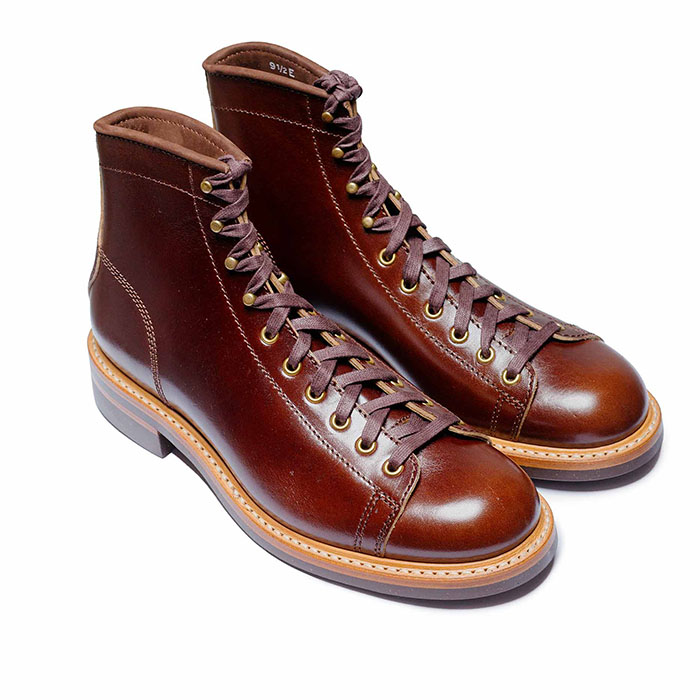 John Lofgren Monkey Boots Shinki Horsebuttt - $1,136 The classic monkey boot silhouette in an incredibly rich Shinki russet horse leather.
 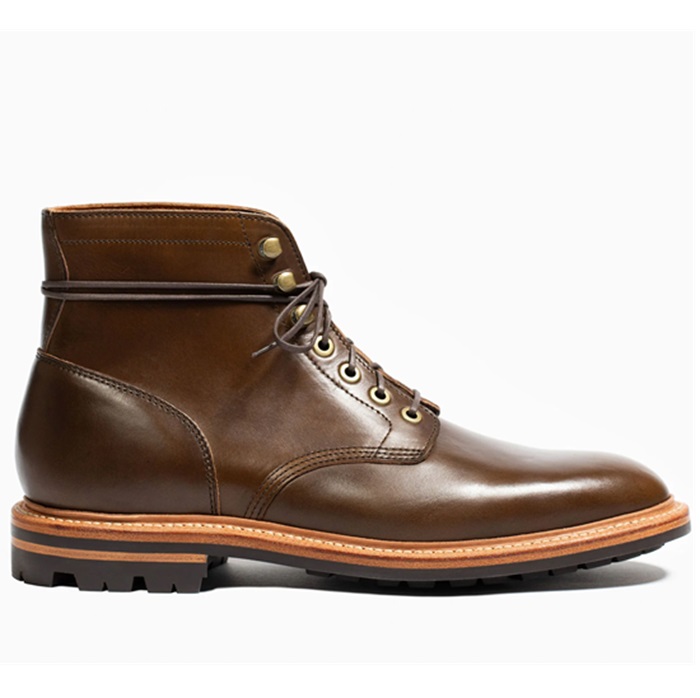 Grant Stone Diesel Boot Dark Olive Chromexcel - $395 Goodyear welted, Horween Chromexcel, classic good looks.
 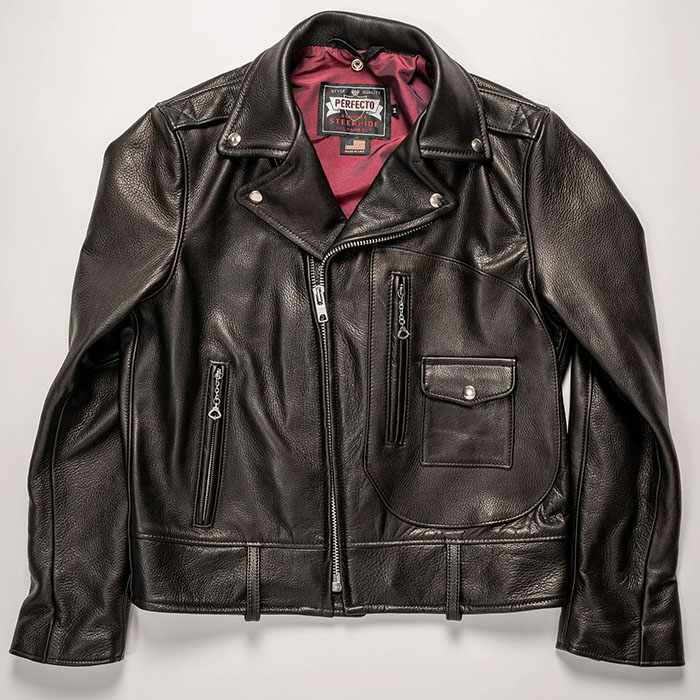 Schott 568 Vandals Jacket - $1,250 The classic Perfecto motorcycle jacket, in a very special limited-edition Schott double rider style.
 Respectfully disagree - The Army published a lot of language phrasebooks, guidebooks, and etc. during WWII. As one example, the War Department put out a small booklet entitled "A Pocket Guide to France" prior to the D-Day invasion. Another later one was "Paris - Guide to Leave Troops".I don't think any of those were produced until the 1950s or 1960s. But I never saw one when I was stationed overseas when I was in the army.
How much writing would a writer have to do, that is, what would the output have to be to actually earn a living writing pulp novels and adolescent or juvenile fiction? There were two or three dozen titles of series characters published from the 1920s up into the 1970s and that was a lot of writing. It could be called a golden era of juvenile fiction and perhaps a golden age for being a boy or girl, too, for that matter.
A related field would be script or screenplay writing. Motion pictures were turned out week after week even by the small studios. Of course, that continues in the form of television. I recall someone describing the work of composers who produced background music for movies as being paid by the yard. It was also a period, up until the war at least, when it was apparently easier to get a job as a musician, that being the time of the big band.
It goes without saying that skill and talent were required for every occupation.
I've seen one printed for GIs going to Britain in preparation for D-Day. It had such advice as, "The British can't make a decent cup of coffee, but you don't know how to make a decent cup of tea." Also: "Don't say 'I feel like a dirty bum.' It means something different to the British."Respectfully disagree - The Army published a lot of language phrasebooks, guidebooks, and etc. during WWII. As one example, the War Department put out a small booklet entitled "A Pocket Guide to France" prior to the D-Day invasion. Another later one was "Paris - Guide to Leave Troops".
These were more leisure-oriented.
There were also official Technical Manuals (TM), such as TM 30-255 "War Department - Military Dictionary English-German, German-English, August 5, 1941"
"Stars and Stripes" also had suggestions for handy French phrases:
"Allons Nous Amuser"
pronounced: Allanoose AmewZAY
"Let's go have some fun."
There might be a job opportunity in producing the more leisure-oriented booklets. Some of them had some vivid, well-done art work on the covers.