By Scott Daniels
The 21st century has seen a tremendous advance in the effort to reduce cigarette smoking among all age groups, to the general benefit of public health. Met with up-front resistance, smoking bans seem to have had their desired effect.
Though outright prohibition of tobacco products has always failed to gain widespread support (Volstead Act, anyone?), a “make it as unpleasant as possible” approach, with smoking forbidden in public spaces, stigmatized in general accompanied by an unpalatable rise in tobacco product prices, aggressive anti-smoking advertising and terse label warnings have been more widely implemented and accepted in the United States and around the world.
According to The American Lung Association, smoking rates among adults in the U.S. have dropped by 73 percent since 1965, from 42 percent that year to 11 percent in 2022 with the trend showing no signs of slowing. Young people are smoking 86 percent less today than in 1997. Smoking clearly carries serious health risks, and our society is better off having given up its pack a day habit.
It is a little hard to imagine now, but there once was no escaping the daily, constant cloud of cigarette smoke. Of course, bars and taverns were a blue-gray haze and reeked of the stuff, with yellowed walls and ashtrays placed every few feet and at every table. But many may be surprised that even McDonald’s restaurants had little stamped aluminum ashtrays on all the tables. Movie theaters, department stores, family restaurants, taxicabs, ice cream parlors, grocery stores, hotel lobbies, elevators, and your grandfather’s Oldsmobile all constantly smelled of smoke. Along with all that noxious air came a support system from Hollywood, radio and television to buttress public consumption. Rather thankfully, much of that is lost.

The comedian Jen Kirkman made that loss a part of her act not long ago, telling of being given a single cigarette by an acquaintance and finding no way, later, to light it. Dropping into a nightclub, she asked the young fellow at the entrance for a pack of matches, once as ubiquitous as sporting magazines at barber shops. The kid looked at her as if she’d asked for a vegetable peeler.
One found bowls of advertising covered cardboard matches, free for the grabbing, on every available flat surface one encountered. Grab a pack of matches at the dentist’s office. Or at the grocery checkout. They were in the entryway of every restaurant in town, in the theater lobby, and at the lunch counter at Woolworth’s. Now, they’re rather hard to find for purchase anywhere. Wooden matches to light the grill, yes. Paper ones for cigarettes, not so much.
Many can remember trying to create some kind of sculpture in jr. high art class only to fail, give up, dig a couple of grooves into the side and present it at home as an ashtray for mom and dad. Those same folk can remember being trapped in the back seat while their parents puffed away with closed windows up front on long and short car rides. There were electric glowing lighters in front and back seats, with ready ashtrays in every door and in the front instrument panel of every car at every price point from Plymouth to Cadillac.
How many of us, as impressionable young people, remember watching just about any movie or television show where most of the characters lit up? It led to sneaking a few from mom’s purse to try after school. It was a strong young fellow indeed who could watch Humphrey Bogart masterfully handle a smoke and look so damn cool with it and not give it a go for themselves.
It didn’t take a mega star to make the point, either. Big tobacco companies sponsored radio and television programs all day and night. Even Fred Flintstone got into the act, puffing away behind the family cave with pal Barney Rubble and touting Winston smokes. Camels? Why, more doctors smoked them than any other brand. It said so right there in Life magazine.
Kids could buy a pack of candy cigarettes—little white sugar sticks with a red tip to simulate a glowing ember. At recess, we played cigarette tag, one variation of many in which players could escape their pursuer by squatting, touching the ground and shouting out the name of a cigarette brand. The chasing kid would have to break off to find another victim until no one could think up a brand not already blurted out.
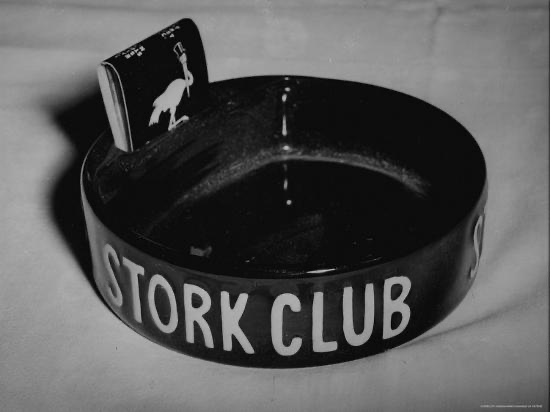
Today much of this ephemera is the stuff of collectors. Elegant and useful cigarette lighters were once manufactured by the millions. Today, one likely carries a Zippo just for the cool clink of fidgeting with opening and closing the cap. Tabletop lighters are no longer on end tables anymore, lest one invite the wrong impression from visitors. One may have an ashtray from the Stork Club on a shelf, but it’s not for *****, just for conversation.
When all that went away, public spaces, for a time, smelled of an unpleasant cocktail of old smoke and new detergent, as buildings worked to scrub away decades of yellow stains. The once routine “smoking or non?” Is never asked at restaurants. The IMDB website advises parents on the smoking content of any program or film. Cigarette culture is gone.
There are counterbalancing, alarming trends however. The use of e-cigarettes, also unhealthy, has been steadily rising among adults and youth. With cannabis widely available in many states, we can see the rise of a new culture of a different kind of smoking.
**** sapiens has always had its addictions, from the beginning of our species. It’s unlikely we will ever fully escape them. The culture of cigarette smoking, as remarkably deep and embedded as it once was, is now the territory of museums and collectors. Meanwhile, smoking related deaths are seeing a somewhat steady, if slow decline, still in the single digits over the century.
The 21st century has seen a tremendous advance in the effort to reduce cigarette smoking among all age groups, to the general benefit of public health. Met with up-front resistance, smoking bans seem to have had their desired effect.
Though outright prohibition of tobacco products has always failed to gain widespread support (Volstead Act, anyone?), a “make it as unpleasant as possible” approach, with smoking forbidden in public spaces, stigmatized in general accompanied by an unpalatable rise in tobacco product prices, aggressive anti-smoking advertising and terse label warnings have been more widely implemented and accepted in the United States and around the world.
According to The American Lung Association, smoking rates among adults in the U.S. have dropped by 73 percent since 1965, from 42 percent that year to 11 percent in 2022 with the trend showing no signs of slowing. Young people are smoking 86 percent less today than in 1997. Smoking clearly carries serious health risks, and our society is better off having given up its pack a day habit.
It is a little hard to imagine now, but there once was no escaping the daily, constant cloud of cigarette smoke. Of course, bars and taverns were a blue-gray haze and reeked of the stuff, with yellowed walls and ashtrays placed every few feet and at every table. But many may be surprised that even McDonald’s restaurants had little stamped aluminum ashtrays on all the tables. Movie theaters, department stores, family restaurants, taxicabs, ice cream parlors, grocery stores, hotel lobbies, elevators, and your grandfather’s Oldsmobile all constantly smelled of smoke. Along with all that noxious air came a support system from Hollywood, radio and television to buttress public consumption. Rather thankfully, much of that is lost.
The comedian Jen Kirkman made that loss a part of her act not long ago, telling of being given a single cigarette by an acquaintance and finding no way, later, to light it. Dropping into a nightclub, she asked the young fellow at the entrance for a pack of matches, once as ubiquitous as sporting magazines at barber shops. The kid looked at her as if she’d asked for a vegetable peeler.
One found bowls of advertising covered cardboard matches, free for the grabbing, on every available flat surface one encountered. Grab a pack of matches at the dentist’s office. Or at the grocery checkout. They were in the entryway of every restaurant in town, in the theater lobby, and at the lunch counter at Woolworth’s. Now, they’re rather hard to find for purchase anywhere. Wooden matches to light the grill, yes. Paper ones for cigarettes, not so much.
Many can remember trying to create some kind of sculpture in jr. high art class only to fail, give up, dig a couple of grooves into the side and present it at home as an ashtray for mom and dad. Those same folk can remember being trapped in the back seat while their parents puffed away with closed windows up front on long and short car rides. There were electric glowing lighters in front and back seats, with ready ashtrays in every door and in the front instrument panel of every car at every price point from Plymouth to Cadillac.
How many of us, as impressionable young people, remember watching just about any movie or television show where most of the characters lit up? It led to sneaking a few from mom’s purse to try after school. It was a strong young fellow indeed who could watch Humphrey Bogart masterfully handle a smoke and look so damn cool with it and not give it a go for themselves.
It didn’t take a mega star to make the point, either. Big tobacco companies sponsored radio and television programs all day and night. Even Fred Flintstone got into the act, puffing away behind the family cave with pal Barney Rubble and touting Winston smokes. Camels? Why, more doctors smoked them than any other brand. It said so right there in Life magazine.
Today much of this ephemera is the stuff of collectors. Elegant and useful cigarette lighters were once manufactured by the millions. Today, one likely carries a Zippo just for the cool clink of fidgeting with opening and closing the cap. Tabletop lighters are no longer on end tables anymore, lest one invite the wrong impression from visitors. One may have an ashtray from the Stork Club on a shelf, but it’s not for *****, just for conversation.
When all that went away, public spaces, for a time, smelled of an unpleasant cocktail of old smoke and new detergent, as buildings worked to scrub away decades of yellow stains. The once routine “smoking or non?” Is never asked at restaurants. The IMDB website advises parents on the smoking content of any program or film. Cigarette culture is gone.
There are counterbalancing, alarming trends however. The use of e-cigarettes, also unhealthy, has been steadily rising among adults and youth. With cannabis widely available in many states, we can see the rise of a new culture of a different kind of smoking.
**** sapiens has always had its addictions, from the beginning of our species. It’s unlikely we will ever fully escape them. The culture of cigarette smoking, as remarkably deep and embedded as it once was, is now the territory of museums and collectors. Meanwhile, smoking related deaths are seeing a somewhat steady, if slow decline, still in the single digits over the century.