By Scott Daniels
When King Gillette introduced his first safety razor in 1903, it was the beginning of a business model used by many companies since: create a product that consumers will use frequently, and make a key part of the product something that needs frequent replacement. It wasn’t the razor profits that would assure the firm’s continuing profitability, but the replaceable blades that would be sold for years to come to each customer that would make for constant cash flow. Kodak is another example of such thinking: sell the camera relatively cheaply, and keep selling film and developing services for years.
With the benefit of more than 120 years’ hindsight, the design of that first razor was, like the paperclip, perfect from the start. It functioned beautifully, was simple to use, gave years of service, a good, close shave without danger of bloodletting, provided relief from the need to either become an expert straight razor sharpener or visit the barber a few times a week, and the replacement blades were cheap. It revolutionized the morning routine overnight.
All of this is still true of that first razor today.
Yet, the American Safety Razor Company, which soon became simply “Gillette,” went on to create new razor models (in part to keep up with emerging competitors who did the same) with ever more complex designs, few of which contributed to a better shaving experience, but made for ever more expensive models costing men a lot more to get the job done.
All of this is still true today.
Multi-blade cartridges needing more frequent replacement and causing more cuts and abrasions are now, it seems, the norm. Today, even at the huge discounters, a package of four replacement cartridges costs $13 and up. If one can make them stretch a week each, that’s at least $156 a year spent on shaving, not counting creams and restorative balms. The handles are also prone to breakage if dropped, adding to the likely cost. Many men are guilty of a little attempt at frugality, using a cartridge a few days after they feel the pull of dullness, which can only mean more pain and bits of tissue stuck to the face to staunch the blood flow.
It’s enough to make a fellow yearn for great great grandfather’s razor. The good news is you can buy virtually the same razor today, buy replacement blades in bulk, and spend less than $40 shaving for the next couple of years, with comfortable, close shaves every time.
Old safety razors from the early 20th century turn up frequently at thrift shops and antique stores for cheap. If you don’t relish the work of cleaning and sterilizing such a purchase before putting it into service, you can buy a near copy of the one introduced by Mr. Gillette back in the time when Alice Roosevelt was pulling pet snakes out of her purse..
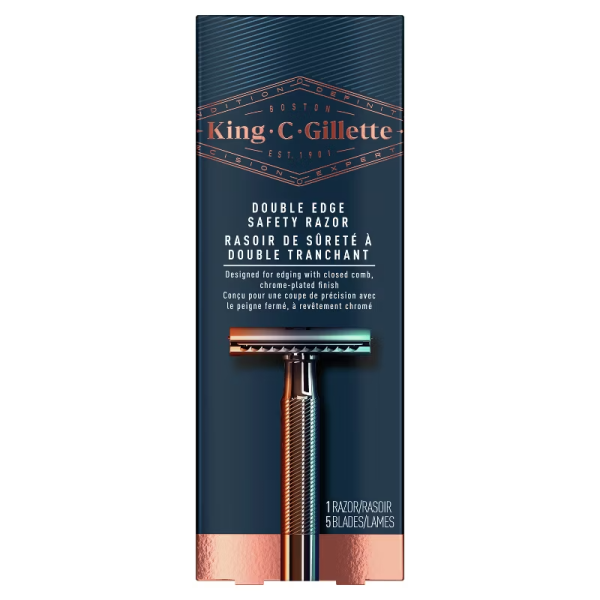
 The Merkur 1904 razor, also called the model 4C, is available from numerous sources for about $30. It consists of a handle, a blade holder and a blade cover. Virtually the same razor is still sold by Gillette at about the same price point, available at Target and other retailers. Both are the same design as the original.
For the blades, 100 replacements are available from Gillette for about $12. Replacing the blade weekly, you’ll be good for the next couple of years, longer if you shave less often or just need to neaten the edges of a grown out beard.
Going even cheaper, Derby brand safety razor blades are out there for $7 or $8 per hundred.
A gentleman can easily free up more than $100 a year by choosing an option that is better, safer and cheaper, allowing for money to spend on more fun things like nice smelling shaving soaps and creams. Speaking from this writer’s personal experience, 200 Derby blades purchased 11 years ago will continue to supply me for the next ten, shaving every other day. That’s a total cost, not counting shaving soaps, of one dollar a year. The razor itself is more than 20 years old and will never wear out.
If you have a particularly difficult or tough beard, you might opt for the more expensive but frighteningly sharp blades made by the brand Feather. Yes, all double edged safety razor blades are extremely sharp, but Feather blades are known for being even more so. These are little pricier at about $20 per 50 blades, but if your beard is thick and untamed, you may need them. It’s still a considerable savings over 21st century cartridge systems.
The daily routine of shaving and how to go about it is, naturally, a very personal choice. Every man has his preferences and you may be happy with your five blade cartridge setup. But for many of us, a cheap, workable solution can have great appeal.
When King Gillette introduced his first safety razor in 1903, it was the beginning of a business model used by many companies since: create a product that consumers will use frequently, and make a key part of the product something that needs frequent replacement. It wasn’t the razor profits that would assure the firm’s continuing profitability, but the replaceable blades that would be sold for years to come to each customer that would make for constant cash flow. Kodak is another example of such thinking: sell the camera relatively cheaply, and keep selling film and developing services for years.
With the benefit of more than 120 years’ hindsight, the design of that first razor was, like the paperclip, perfect from the start. It functioned beautifully, was simple to use, gave years of service, a good, close shave without danger of bloodletting, provided relief from the need to either become an expert straight razor sharpener or visit the barber a few times a week, and the replacement blades were cheap. It revolutionized the morning routine overnight.
All of this is still true of that first razor today.
Yet, the American Safety Razor Company, which soon became simply “Gillette,” went on to create new razor models (in part to keep up with emerging competitors who did the same) with ever more complex designs, few of which contributed to a better shaving experience, but made for ever more expensive models costing men a lot more to get the job done.
All of this is still true today.
Multi-blade cartridges needing more frequent replacement and causing more cuts and abrasions are now, it seems, the norm. Today, even at the huge discounters, a package of four replacement cartridges costs $13 and up. If one can make them stretch a week each, that’s at least $156 a year spent on shaving, not counting creams and restorative balms. The handles are also prone to breakage if dropped, adding to the likely cost. Many men are guilty of a little attempt at frugality, using a cartridge a few days after they feel the pull of dullness, which can only mean more pain and bits of tissue stuck to the face to staunch the blood flow.
It’s enough to make a fellow yearn for great great grandfather’s razor. The good news is you can buy virtually the same razor today, buy replacement blades in bulk, and spend less than $40 shaving for the next couple of years, with comfortable, close shaves every time.
Old safety razors from the early 20th century turn up frequently at thrift shops and antique stores for cheap. If you don’t relish the work of cleaning and sterilizing such a purchase before putting it into service, you can buy a near copy of the one introduced by Mr. Gillette back in the time when Alice Roosevelt was pulling pet snakes out of her purse..
For the blades, 100 replacements are available from Gillette for about $12. Replacing the blade weekly, you’ll be good for the next couple of years, longer if you shave less often or just need to neaten the edges of a grown out beard.
Going even cheaper, Derby brand safety razor blades are out there for $7 or $8 per hundred.
A gentleman can easily free up more than $100 a year by choosing an option that is better, safer and cheaper, allowing for money to spend on more fun things like nice smelling shaving soaps and creams. Speaking from this writer’s personal experience, 200 Derby blades purchased 11 years ago will continue to supply me for the next ten, shaving every other day. That’s a total cost, not counting shaving soaps, of one dollar a year. The razor itself is more than 20 years old and will never wear out.
If you have a particularly difficult or tough beard, you might opt for the more expensive but frighteningly sharp blades made by the brand Feather. Yes, all double edged safety razor blades are extremely sharp, but Feather blades are known for being even more so. These are little pricier at about $20 per 50 blades, but if your beard is thick and untamed, you may need them. It’s still a considerable savings over 21st century cartridge systems.
The daily routine of shaving and how to go about it is, naturally, a very personal choice. Every man has his preferences and you may be happy with your five blade cartridge setup. But for many of us, a cheap, workable solution can have great appeal.